
Writing an effective leave message is not rocket science, but it does require intention. A weak message leaves people confused. A strong message communicates everything clearly in just a few sentences. The best leave messages are concise yet informative, polite yet direct.
At its core, a leave message should answer three questions: Why are you unavailable? When will you return? Who should people contact in your absence? These details remove uncertainty and help maintain workflow continuity. Think of your leave message as a bridge connecting your absence to the ongoing needs of your workplace.
A good leave message should also match the context. A formal corporate email will sound different from a casual WhatsApp status. You would not wear flip-flops to a board meeting, right? The same logic applies to communication style. Tone should align with the audience and situation.
Another overlooked factor is clarity. Avoid vague phrases like “away for some time.” Be specific whenever possible. Clear return dates help people plan accordingly. Transparency reduces unnecessary follow-ups and improves efficiency.
Professional I Am Currently on Leave Message Examples
Sometimes the hardest part is simply finding the right words. Below are several polished examples suitable for different professional situations.
Formal Office Leave Messages
Thank you for your email. I am currently on leave and will return on July 10. During this time, I may have limited access to email. For urgent matters, please contact [Name] at [Email/Phone Number]. I appreciate your understanding and will respond to your message as soon as possible upon my return.
I am currently away from the office on leave until August 2. Your email has been received, and I will reply once I return. If your matter requires immediate assistance, please reach out to our support team or contact [Name] directly.
These messages work well because they are professional, concise, and informative. They avoid unnecessary detail while still sounding courteous and approachable.
Short and Simple Leave Messages
Not every leave message needs corporate polish. Sometimes short and direct works best.
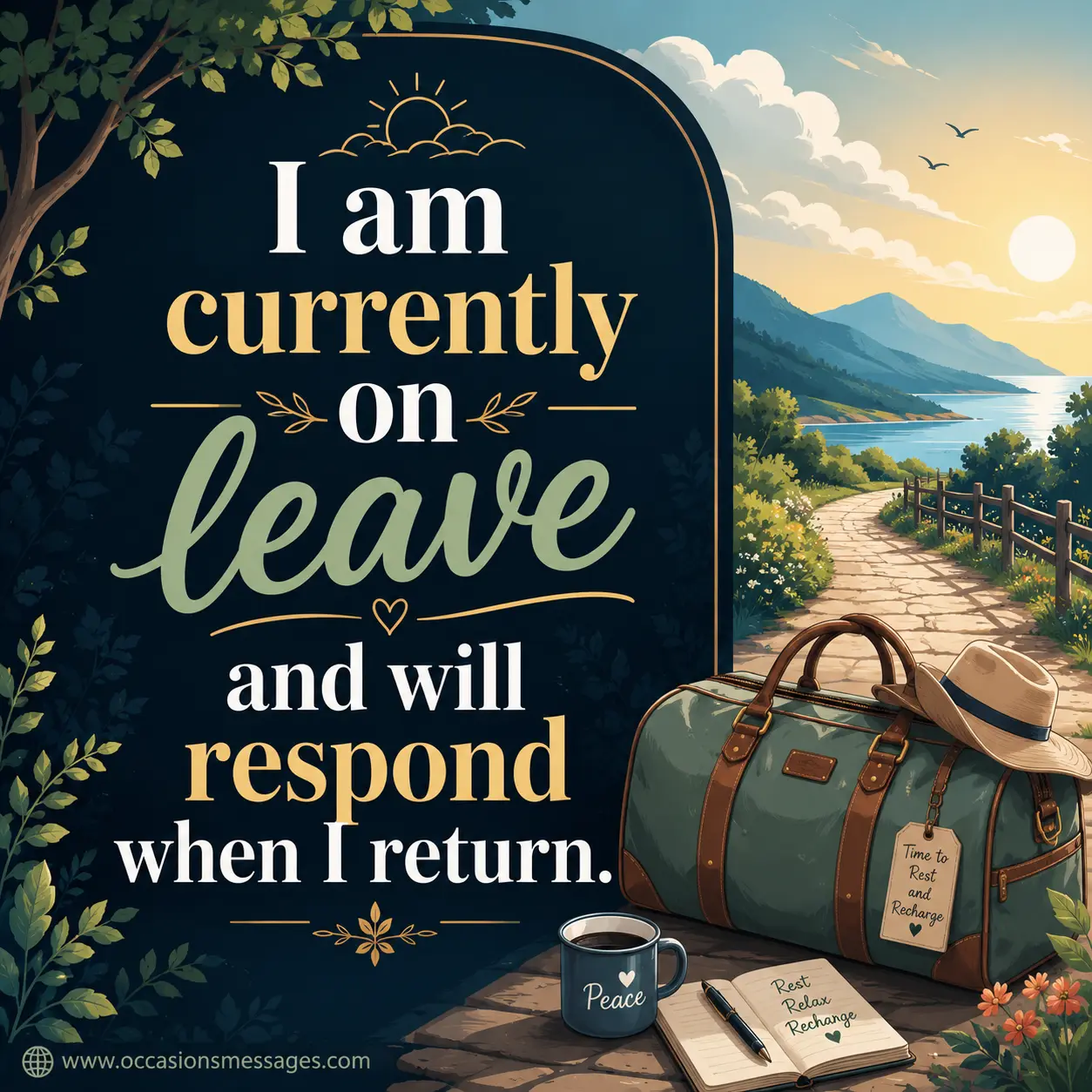
- I am currently on leave and will respond when I return.
- Away from work until Monday. Please contact the office for urgent assistance.
- Currently unavailable due to leave. Replies may be delayed.
Short messages are especially useful for chat apps or internal team communication platforms.
Related Posts: 30+ Have A Safe Flight Messages
Emergency Leave Message Samples
Emergency leave situations require sensitivity and clarity.
Thank you for your message. I am currently away on emergency leave with limited access to communication. Responses may be delayed during this period. For urgent concerns, please contact [Alternative Contact Name]. Thank you for your patience and understanding.
These messages avoid oversharing personal details while still explaining limited availability respectfully.
Friendly and Casual Leave Messages
Not every workplace operates like a courtroom. Many teams prefer friendly communication styles that feel human and relaxed. Casual leave messages can help maintain warmth and connection while still being professional enough for workplace use.
Think of casual leave messages like leaving a handwritten note on your front door for neighbors while you are away. It is informative, polite, and welcoming. These messages work especially well in startups, creative industries, or close-knit teams where communication feels more conversational.
Humor can also make leave messages memorable when used carefully. A light-hearted vacation response can brighten someone’s day. Still, it is important not to cross the line into unprofessional territory. A joke should never confuse recipients about your return date or who they should contact in your absence.
Casual Leave Messages for Coworkers
Here are a few examples of relaxed leave messages:
- I’m currently on leave enjoying some much-needed downtime. I’ll be back next week and will reply as soon as I can.
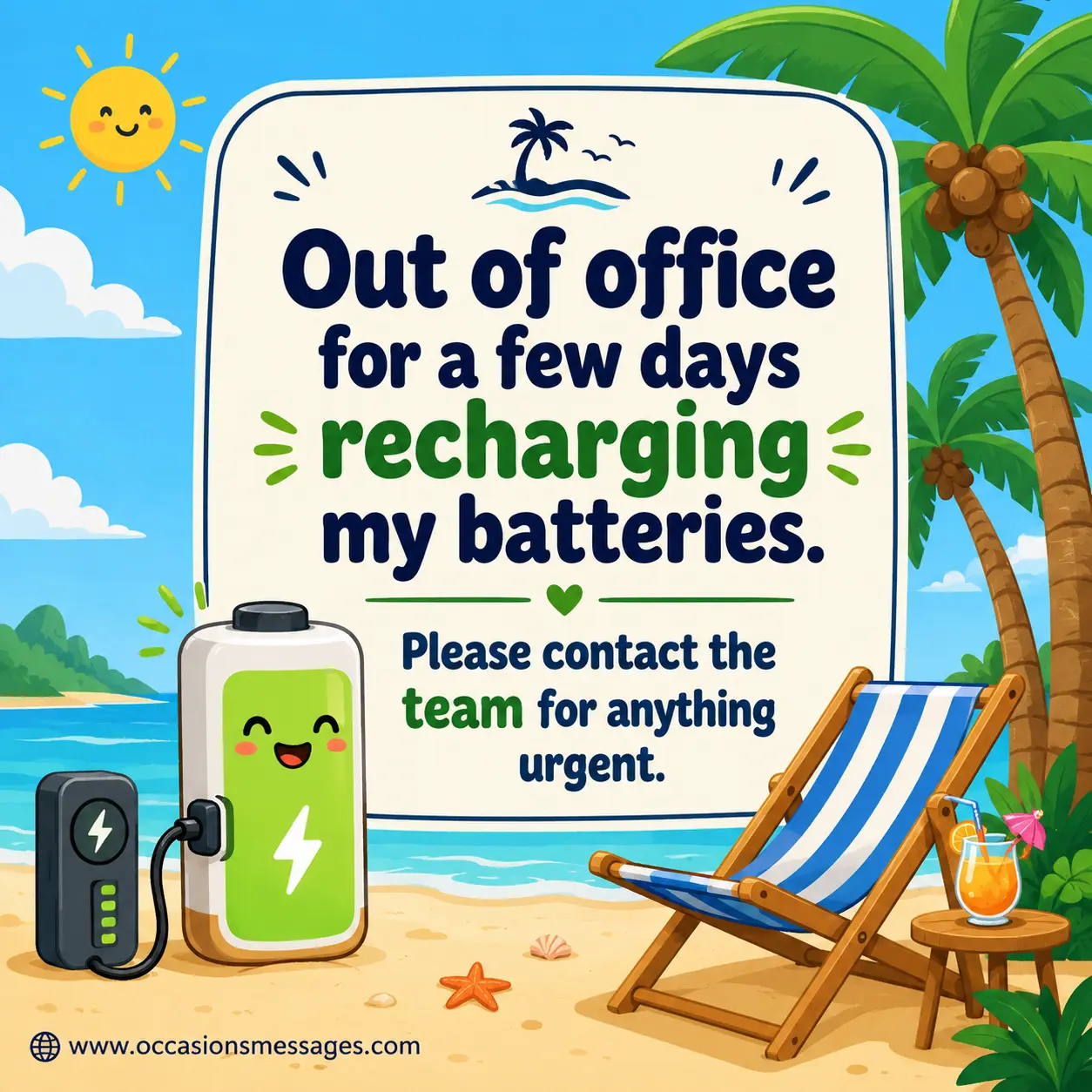
- Out of office for a few days recharging my batteries. Please contact the team for anything urgent.
- Currently away from work and probably nowhere near my laptop. I’ll get back to you soon after returning.
These messages sound warm and approachable while still communicating the necessary details.
More Information: 50+ Out Of Office Message Traveling For Work
Warm Vacation Auto-Reply Examples
Vacation auto-replies are often the perfect place to show a little personality. After all, people appreciate communication that feels genuine rather than robotic.
For example:
- Hello! I’m currently away on vacation, trading emails for sunshine and relaxation until June 20. I’ll respond when I return. For urgent matters, please contact our office team.
Another example:
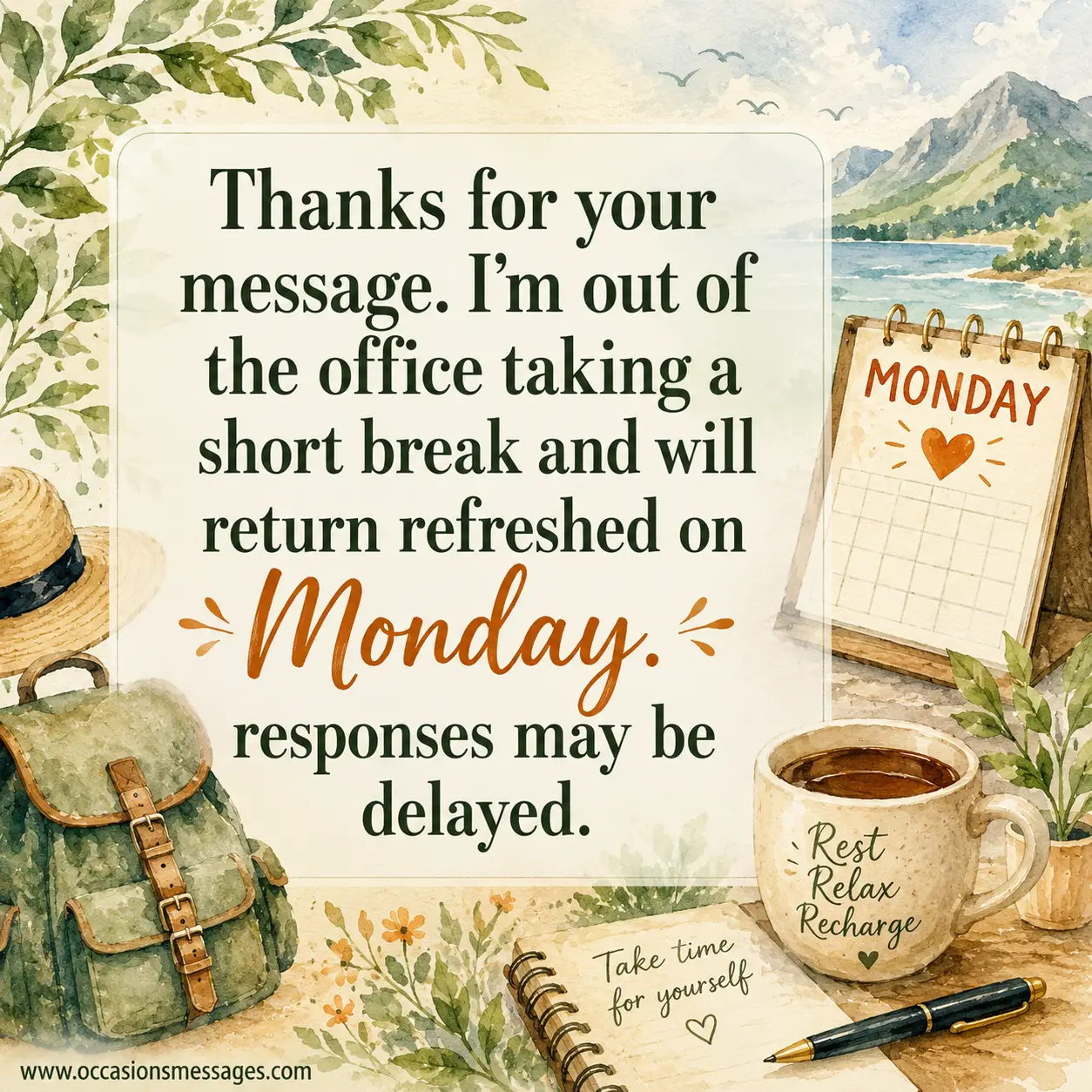
- Thanks for your message. I’m out of the office taking a short break and will return refreshed on Monday. Until then, responses may be delayed.
These messages create a friendlier experience while still setting clear expectations.
Leave Messages for Different Situations
Not all leave situations are the same. A sick leave message feels very different from a maternity leave notification or a short annual vacation reply. The best leave messages adapt to the situation while remaining respectful and clear.
Choosing the correct tone matters because communication shapes perception. A compassionate tone during bereavement leave shows sensitivity. A cheerful tone during annual leave feels natural and appropriate. Context always guides communication style.
Sick Leave Messages
Sick leave messages should be straightforward and professional. There is no need to provide detailed medical information. Privacy matters.
Example:
“I am currently on sick leave and unavailable at the moment. Responses may be delayed until I return. For immediate assistance, please contact [Name].”
This type of message keeps things respectful without oversharing personal details.
Maternity and Paternity Leave Messages
Parental leave messages usually involve longer absences, making detailed communication more important.
Example:
“Thank you for your email. I am currently on maternity leave and expected to return in October. During my absence, please contact [Name] regarding ongoing projects or urgent matters.”
Long-term leave messages should clearly explain alternative contacts because recipients may need ongoing support during the absence.
Annual Vacation Leave Messages
Annual leave messages can sound slightly more relaxed.
Example:
“I’m currently on annual leave and will return on July 15. I’ll respond to your email once I’m back in the office. Thanks for your patience.”
Vacation messages often balance professionalism with friendliness because they reflect planned personal time rather than emergencies.
Bereavement Leave Messages
Bereavement leave messages require sensitivity and simplicity.
Example:
- I am currently away on bereavement leave and may not be able to respond promptly. Thank you for your understanding during this difficult time.
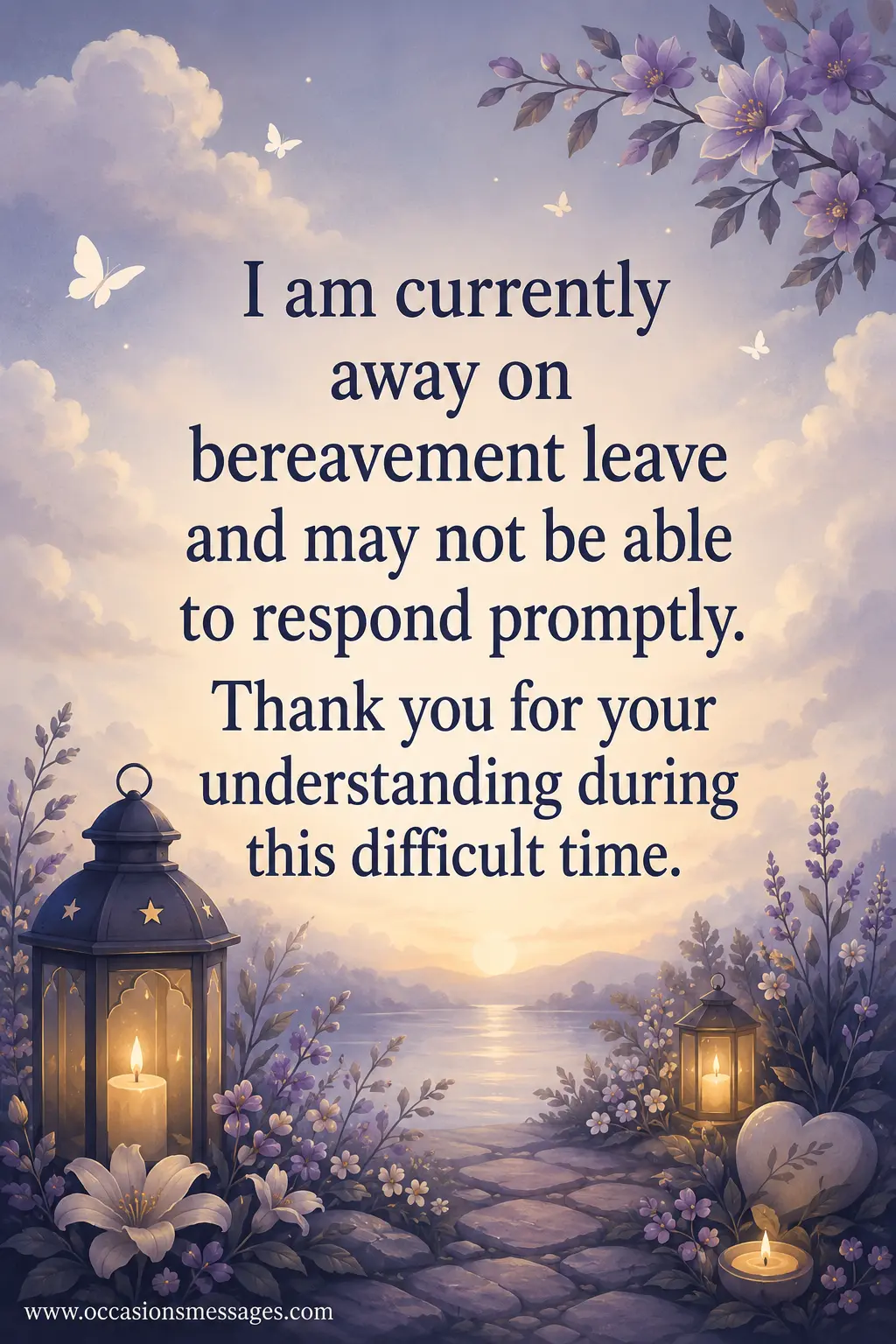
These messages should remain brief and respectful. There is no obligation to share additional personal details.
Best Practices for Writing Effective Leave Messages
A leave message may seem small, but tiny details can make a huge difference in how it is received. Think about how frustrating unclear directions can feel during a road trip. Poor leave messages create the same kind of confusion in professional communication.
The best leave messages are proactive rather than reactive. They anticipate questions before recipients even ask them. A strong message minimizes uncertainty, keeps workflows moving, and protects professional relationships while you are away.
Setting Clear Expectations
People mainly want clarity. They need to know when you will return and whether they should expect a delayed response.
Avoid vague language like:
- Gone for a while
- Unavailable temporarily
- Will reply later
Instead, use:
- I will return on June 25
- Responses may be delayed until next Monday
- Please contact [Name] for urgent assistance
Specific information eliminates uncertainty and improves workplace efficiency.
Explore More: 30+ Heartfelt Retirement Wishes for a Woman
Adding Alternative Contact Information
One of the biggest mistakes people make is forgetting backup contacts. Imagine a customer urgently needing help while the only available employee disappears without guidance. It creates frustration instantly.
Always include another person, department, or support channel whenever possible. This small step shows responsibility and professionalism.
Example:
“For urgent project updates, please contact Maria at .”
Simple additions like this keep communication flowing smoothly.
Leave Messages Across Different Platforms
Communication today happens everywhere; not just email. People use Slack, Microsoft Teams, WhatsApp, Zoom chats, and mobile messaging apps daily. Each platform requires slightly different leave message styles.
The rise of hybrid work has transformed communication habits dramatically. Studies show employees now juggle multiple communication tools simultaneously, increasing the risk of confusion and missed messages.
That makes clear leave notifications even more important.
Email Auto-Reply Messages
Email remains the gold standard for formal leave communication. Despite newer platforms, business email continues to dominate official workplace interactions.
A strong email auto-reply typically includes:
- Return date
- Alternative contact
- Response expectations
- Professional tone
Example:
“Thank you for your email. I am currently out of the office on leave until July 5 and will respond upon my return.”
WhatsApp and Chat Status Messages
Messaging apps require shorter communication styles because users expect quick readability.
Examples:
- On leave until Monday.
- Currently away from work. Replies may be delayed.
- Vacation mode activated 🌴 Back next week.
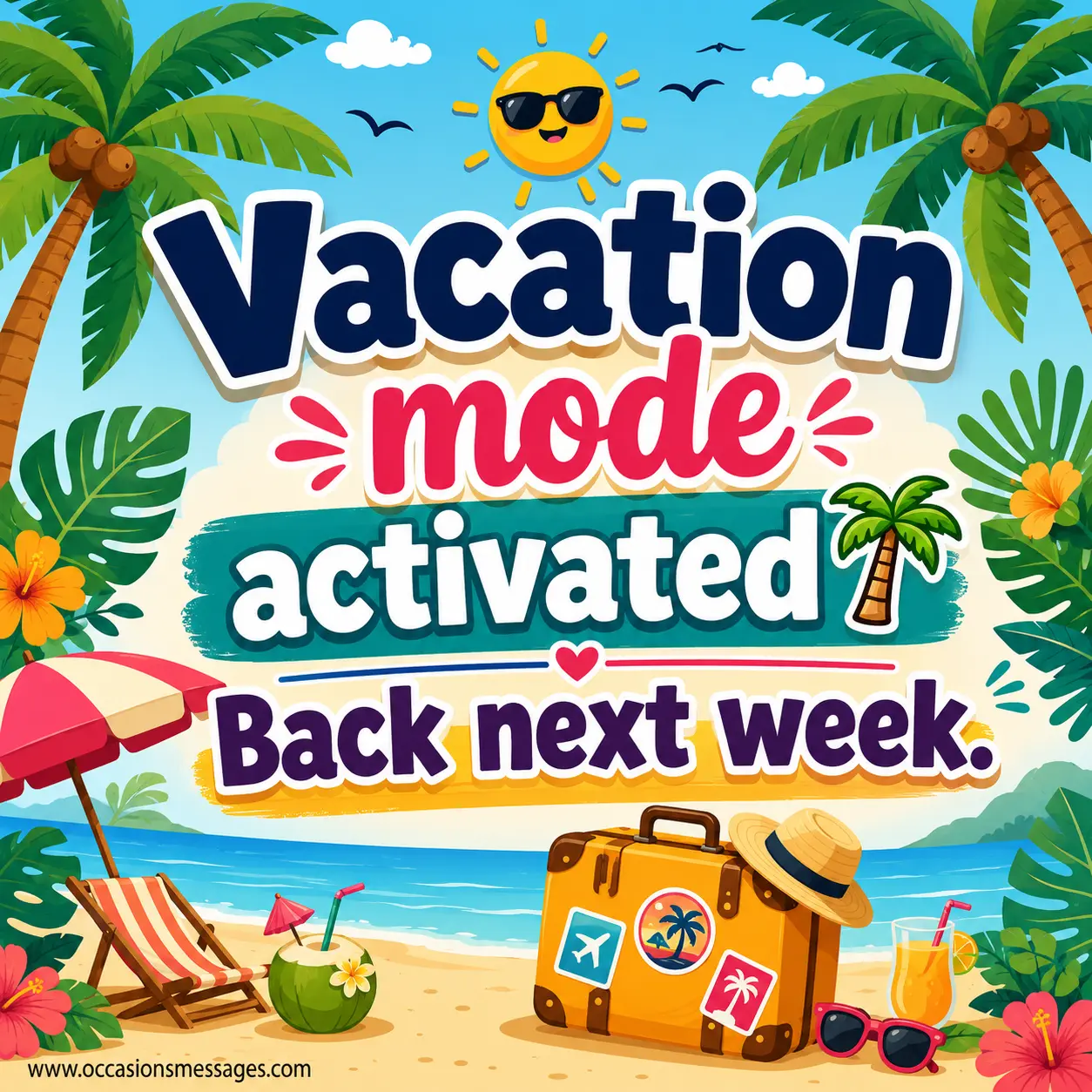
These statuses work best when brief and easy to understand instantly.
Slack and Microsoft Teams Leave Notices
Internal workplace platforms often integrate leave notifications directly into profiles and calendars.
Example status:
- Out on annual leave until Friday.
- Currently unavailable. Contact the operations team for urgent support.
Clear status updates reduce unnecessary tagging and interruptions.
Real-Time Workplace Communication Trends in 2025
The way people communicate at work is changing faster than ever. Hybrid work, remote teams, and digital collaboration tools have transformed workplace expectations completely. Leave communication has evolved alongside these trends.
Recent workplace reports reveal that employees face communication overload daily, with constant interruptions reducing productivity and increasing stress.
Clear leave messages now serve as essential boundary-setting tools in modern work culture.
How Remote Work Changed Leave Communication
Remote work blurred the line between personal life and professional availability. Before remote work became widespread, leaving the office physically signaled unavailability. Today, laptops and smartphones create the expectation that people are always reachable.
This shift has made leave messages more important than ever. Employees now rely on digital notifications to communicate boundaries clearly. Without them, coworkers may assume someone is simply ignoring messages rather than genuinely unavailable.
Remote work also increased the use of asynchronous communication. Teams often work across different time zones and schedules, meaning leave notices help prevent unnecessary delays and confusion.
Statistics Showing the Rise of Digital Workplace Messaging
Recent workplace studies highlight just how communication-heavy modern work has become:
| Statistic | Source |
|---|---|
| Employees receive an average of 117 emails daily | Microsoft Work Trend Report |
| 83% of workers struggle with scattered communication tools | ClickUp Insights |
| 87% of employees waste hours clarifying unclear messages | Atlassian Research |
| 56% of critical business communication still happens through email | Exclaimer Report |
These numbers paint a clear picture: communication clarity is no longer optional. Effective leave messages help reduce confusion, maintain productivity, and improve workplace relationships.
FAQs
1. What is the best professional leave message?
The best professional leave message is clear, polite, and concise. It should include your return date, response expectations, and an alternative contact for urgent matters.
2. Should I explain the reason for my leave?
You can mention the reason briefly if appropriate, such as annual leave or sick leave, but detailed personal explanations are unnecessary.
3. How long should a leave message be?
Most effective leave messages are between two and five sentences long. Keep them informative without overwhelming the reader.
4. Can leave messages be funny?
Yes, especially in casual workplaces. Humor can make messages feel more human, but clarity and professionalism should always come first.
5. What should I include in an out-of-office auto-reply?
An effective auto-reply should include:
- Your leave dates
- Expected response time
- Alternative contact information
- A polite closing message
Last Updated on July 20, 2026
SHARE ON