

Salary discussions are often among the most uncomfortable parts of the hiring process. Most people spend years developing technical skills, communication abilities, and industry expertise, yet very few receive formal training on how to negotiate compensation. As a result, many candidates feel nervous when they receive an offer that doesn’t align with their expectations. They worry that speaking up may appear ungrateful or could even jeopardize the opportunity.
The reality is quite different. Recruiters and hiring managers regularly negotiate salaries as part of their job responsibilities. In many industries, negotiation is considered a normal stage of the hiring process rather than an exception. Recent career research suggests that employers frequently anticipate some level of negotiation after making an initial offer. According to recent salary negotiation studies, a significant percentage of employers expect candidates to negotiate, while many candidates still accept the first offer presented to them.
Think of salary negotiation like purchasing a house or a vehicle. The first number presented is often the starting point of a conversation rather than the final destination. Understanding this mindset can immediately reduce anxiety. Instead of viewing salary discussions as a conflict, consider them a collaborative effort to reach a compensation package that works for both parties. When approached professionally, discussing a low salary offer can actually demonstrate confidence, business awareness, and self-respect.
When You Should Tell an Employer the Salary Is Too Low
Not every offer that feels disappointing is necessarily too low. Before responding, it’s important to determine whether your reaction is based on objective market realities or personal expectations. The most successful negotiators take time to evaluate the offer carefully rather than reacting immediately.
Experts consistently recommend requesting time to review the offer before responding. This allows candidates to analyze the complete package, compare market rates, and prepare a strategic response. Taking a day or two demonstrates professionalism while giving you room to make a rational decision.
Recognizing a Below-Market Offer
A salary may genuinely be too low if it falls significantly below industry standards, regional averages, or compensation offered by competitors for similar responsibilities. Candidates should compare the offer against reliable salary benchmarks, considering experience level, location, certifications, and specialized skills.
A useful approach is to create a comparison table.
| Factor | Offer Received | Market Expectation |
|---|---|---|
| Base Salary | Current Offer | Average Industry Range |
| Bonus Potential | Included/Not Included | Industry Average |
| Benefits | Offered Benefits | Market Standard |
| Growth Opportunities | Available | Expected |
Looking at the complete picture often reveals whether the salary is truly below market or simply structured differently.
Evaluating the Entire Compensation Package
Salary matters, but it isn’t the only component of compensation. Flexible schedules, bonuses, stock options, remote work arrangements, additional vacation time, tuition assistance, and professional development opportunities can significantly increase the value of an offer.
Recent employer surveys indicate that many organizations unable to increase salaries are instead enhancing benefits and perks packages. Nearly three-quarters of employers report challenges meeting salary expectations and often compensate through alternative benefits. While these benefits can be valuable, candidates should still prioritize securing the strongest possible base salary because it influences future raises and earning potential.
Principles for Politely Communicating Salary Concerns
The words you choose can significantly influence how your message is received. A professional response focuses on facts, appreciation, and collaboration rather than frustration or disappointment.
Use Facts Instead of Emotions
Avoid statements such as:
- This salary is insulting.
- I expected much more.
- This isn’t enough.
Instead, focus on market data, industry standards, and your qualifications. Professionals who use objective reasoning often achieve better outcomes than those who rely on emotional arguments.
Stay Professional and Positive
The goal is not to “win” a negotiation. The goal is to find a solution. Even if the salary cannot be adjusted, maintaining professionalism preserves relationships and future opportunities.
Remember that hiring managers are often working within budget constraints. Approaching discussions respectfully demonstrates maturity and business awareness.
Related Post: 35+ Best Wishes For New Job To Friend
Best Messages to Say the Salary Is Too Low
Below are several professional ways to communicate that the salary is lower than expected.
Simple Professional Message
- “Thank you for the offer. I’m very excited about the opportunity. After reviewing the compensation package and considering my experience and the current market range for similar roles, I was hoping for a salary closer to [amount]. Is there flexibility to discuss the compensation?”
This message is concise, respectful, and effective.
Message for Email Negotiations
- “I sincerely appreciate the offer and the opportunity to join your team. After carefully reviewing the compensation package, I believe the proposed salary falls below the market rate for someone with my background and experience. Based on my research and qualifications, I was expecting a range closer to [range]. I would welcome the opportunity to discuss whether adjustments can be made.”
Message for Phone Conversations
- “I’m genuinely excited about the role and appreciate the offer. After reviewing the salary, I was hoping we might discuss compensation further. Based on my experience and market research, I was expecting something closer to [amount]. Is there room for flexibility?”
This approach keeps the conversation collaborative rather than confrontational.
Message for Experienced Professionals
- “Thank you for the offer. Given my years of experience, specialized expertise, and track record of delivering measurable results, I was expecting compensation more closely aligned with [amount]. I’d be interested in discussing whether there’s flexibility in the package.”
Message When You Want to Counteroffer
- “I appreciate the offer and remain enthusiastic about the position. After evaluating the responsibilities and comparing market compensation for similar roles, I would like to propose a salary of [amount]. I believe this better reflects the value and experience I bring to the role.”
Message When You Must Decline the Offer
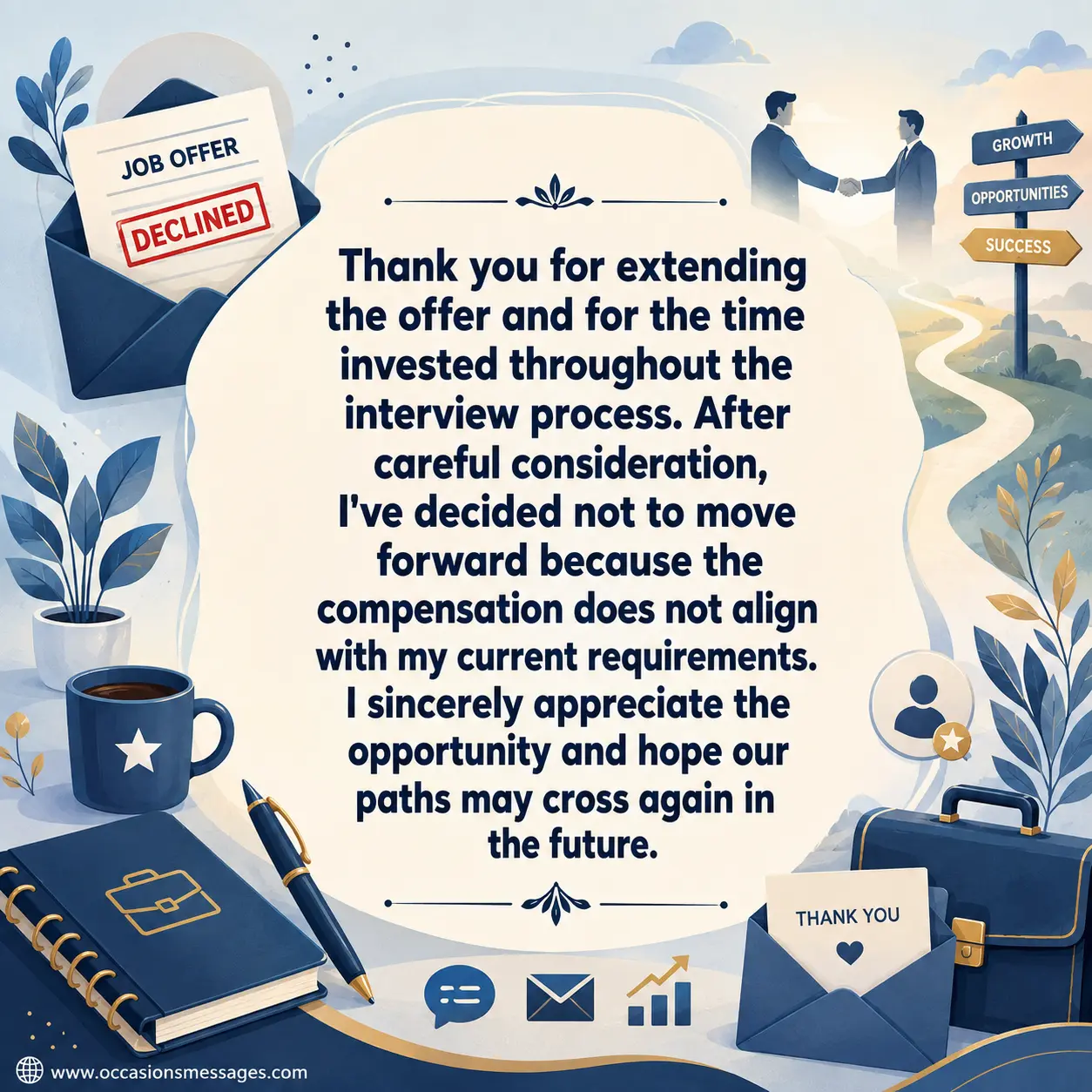
- “Thank you for extending the offer and for the time invested throughout the interview process. After careful consideration, I’ve decided not to move forward because the compensation does not align with my current requirements. I sincerely appreciate the opportunity and hope our paths may cross again in the future.”
Sample Salary Negotiation Templates
Short Email Template
Subject: Salary Discussion
Dear Hiring Manager,
Thank you for the offer and for the opportunity to join your team. I am excited about the role and the potential contribution I can make.
After reviewing the compensation package, I was hoping for a salary closer to [amount] based on my experience and current market benchmarks. Would it be possible to discuss the compensation further?
Thank you for your consideration.
Best regards,
[Your Name]
Detailed Negotiation Email
A longer negotiation email allows you to explain your value proposition more clearly. Include measurable achievements, industry expertise, certifications, and examples of previous success. Keep the tone professional and focused on business outcomes rather than personal financial needs.
When candidates present evidence of their value, employers are more likely to view requests positively. Negotiation experts frequently recommend combining enthusiasm with objective justification.
Discover Related: 40+ Thank You Messages For Promotion
Final Counteroffer Example
- “Thank you again for the offer. After careful consideration, I would be comfortable accepting the position at a salary of [amount]. Based on my experience, industry benchmarks, and the responsibilities associated with the role, I believe this figure accurately reflects the value I can bring. I remain enthusiastic about the opportunity and hope we can reach an agreement.”
Strategies That Increase Your Chances of Success
Using Market Research
Research is your strongest negotiation tool. Rather than simply stating that the salary feels low, demonstrate why it is below market expectations. Employers are far more likely to consider adjustments when candidates present objective data.
Recent salary negotiation studies suggest that candidates who negotiate frequently achieve meaningful increases over the original offer. Some analyses estimate average negotiation gains ranging from several thousand dollars annually to percentage increases exceeding 7–10% depending on the role and industry.
Negotiating Benefits and Perks
When salary flexibility is limited, explore alternatives such as:
- Signing bonuses
- Performance bonuses
- Additional paid time off
- Remote work options
- Professional development budgets
- Tuition reimbursement
- Flexible schedules
These benefits may substantially improve overall compensation while helping employers stay within budget constraints.
Worth Checking: 47+ Sick Text Messages To Boss for Professional Updates
Frequently Asked Questions
1. Is it rude to tell an employer the salary is too low?
No. When communicated professionally and respectfully, discussing salary expectations is a normal part of the hiring process. Most employers expect some negotiation.
2. What is the best phrase to say the salary is too low?
A strong option is: “Thank you for the offer. Based on my experience and market research, I was hoping for a salary closer to [amount]. Is there flexibility to discuss the compensation?”
3. Can negotiating salary cause an employer to withdraw an offer?
While it can happen occasionally, reputable employers generally do not withdraw offers simply because a candidate respectfully negotiates compensation.
4. Should I negotiate salary through email or phone?
Both methods work. Many experts recommend email because it allows you to organize your thoughts clearly and avoid pressure during live conversations.
5. What if the employer cannot increase the salary?
Consider negotiating bonuses, remote work arrangements, extra vacation days, professional development opportunities, or future salary review timelines. These alternatives can improve the overall value of the offer.
Last Updated on July 9, 2026
SHARE ON