

Words Of Encouragement During Illness. Illness can arrive unexpectedly, turning ordinary days into difficult battles filled with uncertainty, discomfort, and emotional exhaustion. Whether someone is recovering from surgery, managing a chronic condition, undergoing intensive treatment, or simply fighting a seasonal illness, the right words can provide comfort that medicine alone cannot offer. While doctors treat the body, encouragement often helps heal the spirit. A sincere message can remind a struggling person that they are not facing their journey alone.
Research consistently shows that emotional and social support are linked to better health outcomes, improved well-being, reduced stress, and higher quality of life among patients dealing with illness. Studies have found that strong social support positively influences numerous health indicators and recovery experiences.
In many ways, encouraging words act like a lighthouse during a storm. They do not remove the waves, but they help people find direction and hope when everything feels overwhelming. Understanding how to communicate encouragement effectively can make a meaningful difference in someone’s recovery journey.
Powerful Words of Encouragement During Illness
Short Encouraging Messages
Sometimes the shortest messages have the greatest impact. Brief expressions of support can brighten a difficult day and remind someone they are remembered.
Examples include:
- Wishing you strength and comfort today.

- You are in my thoughts and prayers.
- Take all the time you need to heal.
- Every step forward matters.
- You are stronger than this illness.
- Better days are ahead.
- Keep believing in your recovery.
- I’m cheering for you every day.
These messages are ideal for text messages, greeting cards, emails, or social media support.
Heartfelt Messages for Friends
Friends often provide a unique type of support because they bring familiarity, laughter, and companionship into difficult circumstances. A heartfelt message can strengthen bonds and provide emotional reassurance.
You might say:
- Dear friend, I know this season of life is incredibly challenging, but I want you to remember that you don’t have to face it alone. Your courage inspires everyone around you, even on days when you don’t feel strong. Lean on me whenever you need support, whether that’s a conversation, a distraction, or simply someone to listen. I’m here for the entire journey.
Messages like this communicate commitment rather than temporary sympathy. They reassure the person that support will continue beyond the initial diagnosis or treatment phase.
Encouraging Words for Family Members
When illness affects a family member, emotions often run especially deep. Family encouragement should combine love, reassurance, and practical support.
A meaningful message might read:
- We are facing this together as a family. Your strength has carried us through so many challenges, and now it’s our turn to support you. Please focus on healing and allow us to help whenever you need it. You are deeply loved, and we believe in you every step of the way.

Family encouragement works best when it emphasizes unity. Knowing that loved ones remain committed can provide tremendous comfort during difficult periods.
Read Also: 60+ Best Friend Anniversary Wishes
Inspirational Messages for Long-Term Illness
Chronic illness presents unique emotional challenges because recovery may not follow a clear timeline. Encouragement should recognize persistence rather than focusing exclusively on getting better.
Examples include:
- Your determination inspires everyone around you.

- You continue to show incredible strength every day.
- Progress isn’t always visible, but your efforts matter.
- You are more than your diagnosis.
- Your value and worth remain unchanged.
These messages acknowledge the ongoing nature of chronic illness while celebrating resilience and personal identity beyond medical conditions.
What to Say to Someone Facing Serious Health Challenges
Supporting Someone Through Hospitalization
Hospital stays can feel intimidating and isolating. The unfamiliar environment, medical procedures, and uncertainty often create emotional strain. Encouraging words should focus on companionship and reassurance.
Try saying:
- I know being in the hospital isn’t easy, but you’re surrounded by people who care about you. Take things one step at a time, and remember that healing is a process. I’m thinking about you constantly and looking forward to seeing you stronger each day.
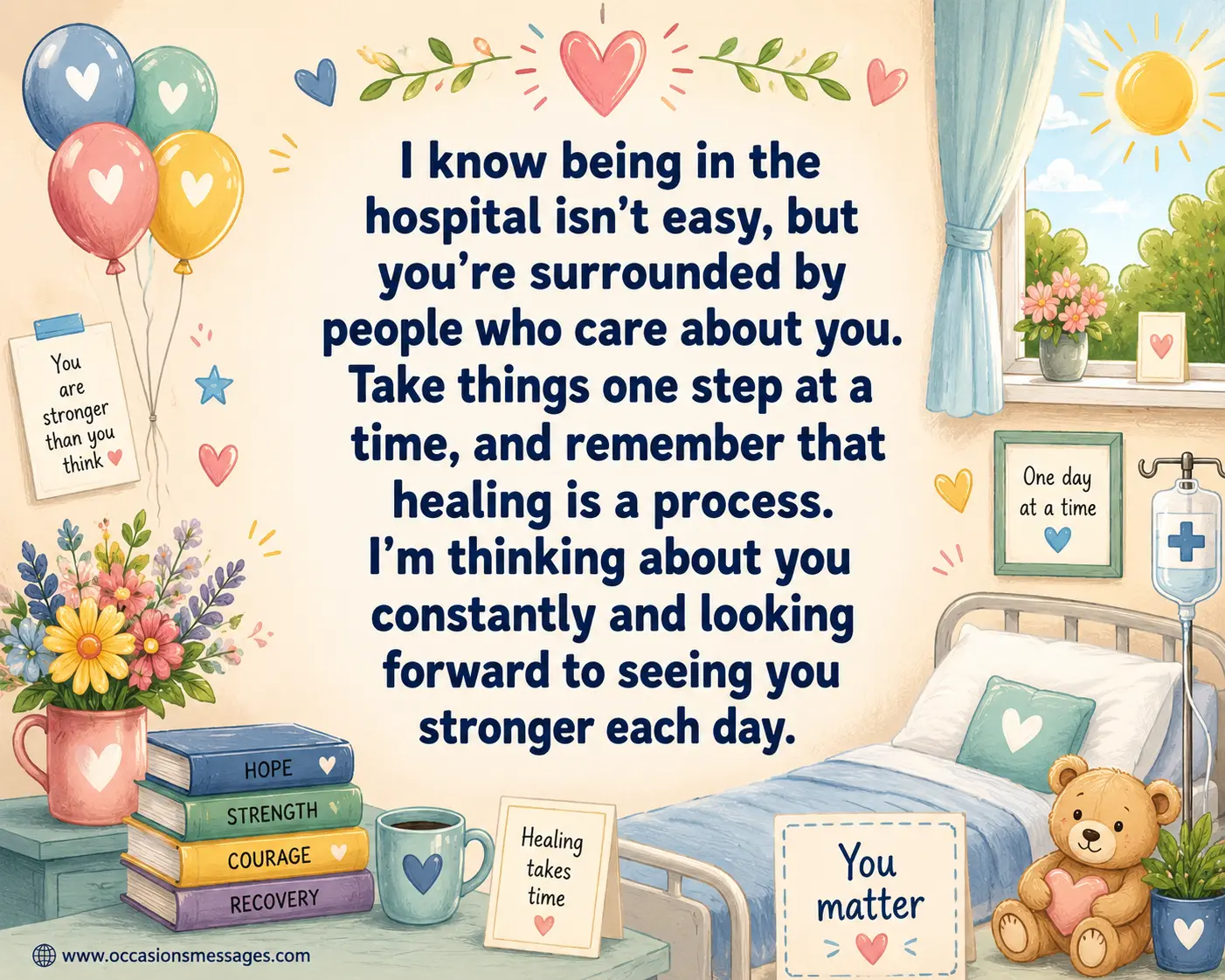
This approach provides comfort without minimizing the reality of the situation.
Encouragement During Cancer Treatment
Cancer treatment often involves emotional highs and lows. Patients may experience fear, fatigue, frustration, and hope simultaneously. Encouragement should focus on courage and perseverance.
Supportive messages include:
- Your bravery shines even on the hardest days. You are facing challenges that many people cannot imagine, yet you continue moving forward. Allow yourself grace during difficult moments. Every treatment, every appointment, and every day completed is a victory worth recognizing.
Words like these acknowledge the reality of the struggle while highlighting personal strength.
Comforting Someone Living with Chronic Illness
People living with chronic conditions often appreciate encouragement that recognizes their daily efforts. Unlike temporary illnesses, chronic conditions require ongoing adaptation and resilience.
Consider saying:
- I know your journey isn’t easy, and I admire the way you continue showing up every day despite the challenges you face. Your strength isn’t measured by perfect days but by your ability to keep going. You deserve kindness, patience, and support, and I’m honored to be part of your support system.
Research continues to demonstrate that emotional support contributes positively to quality of life among individuals managing chronic health conditions.
Related: 47+ Sick Text Messages To Boss for Professional Updates
Examples of Encouraging Messages
Professional Messages
Professional encouragement is appropriate for coworkers, clients, employees, or business associates.
| Situation | Example Message |
|---|---|
| Coworker Illness | “Wishing you a smooth recovery and renewed strength. Please focus on your health and know that we’re thinking of you.” |
| Employee Recovery | “Take the time you need to heal. We look forward to welcoming you back when you’re ready.” |
| Client Support | “Sending our best wishes for your recovery. We hope each day brings greater comfort and progress.” |
Motivational Quotes About Strength and Healing
Inspirational quotes often resonate because they capture complex emotions in simple language.
Some examples include:
- Strength grows in the moments when you think you can’t go on but keep going anyway.
- Healing is not always a straight line, but every step matters.
- Hope is the quiet voice that says tomorrow can be better.
- Courage doesn’t mean you’re not afraid; it means you move forward despite fear.

These reflections can serve as daily reminders of resilience during recovery.
How to Deliver Encouragement Effectively
Written Messages
Written messages offer lasting comfort because they can be revisited repeatedly. A thoughtful card, email, or text message may become a source of encouragement during particularly difficult moments.
When writing, focus on sincerity rather than perfection. Simple words delivered authentically often have greater impact than elaborate speeches. Mention specific qualities you admire, such as resilience, kindness, or determination.
A written message also allows the recipient to absorb support at their own pace, which can be especially valuable during periods of fatigue or emotional overwhelm.
Face-to-Face Conversations
In-person encouragement offers emotional connection that words alone sometimes cannot provide. Facial expressions, tone of voice, and attentive listening contribute significantly to the message being conveyed.
During conversations, prioritize listening. Ask open-ended questions and allow the person to share as much or as little as they wish. Encouragement often emerges naturally when someone feels genuinely heard and understood.
Research has repeatedly shown the importance of emotional responsiveness and supportive relationships in promoting well-being during illness.
Digital Support in Modern Times
Technology has transformed the way people offer encouragement. Video calls, social media messages, group chats, and online support communities make it easier to stay connected regardless of physical distance.
Digital communication allows friends and family to provide consistent encouragement throughout treatment and recovery. Even a quick message saying “Thinking of you today” can have a meaningful impact.
In an increasingly connected world, emotional support is often just a click away. What matters most is not the method of delivery but the authenticity behind the message.
Read Also: 47+ Words of Encouragement Health Issues Ideas
Frequently Asked Questions
1. What are the best words of encouragement during illness?
The best words are sincere, compassionate, and supportive. Examples include “I’m here for you,” “Take things one day at a time,” and “You are stronger than you know.”
2. What should I avoid saying to someone who is sick?
Avoid minimizing their experience, offering unsolicited medical advice, or using overly optimistic statements that dismiss their feelings.
3. Can emotional support really help recovery?
Research suggests that strong social and emotional support is associated with improved well-being, better quality of life, and positive health outcomes.
4. How often should I check on someone who is ill?
Consistency matters more than frequency. Regular, thoughtful contact helps people feel supported without overwhelming them.
5. What is the most important thing to communicate to someone facing illness?
The most important message is that they are not alone. Knowing that people genuinely care can provide immense comfort during difficult times.
Last Updated on June 27, 2026
SHARE ON